STRATASkip to the research
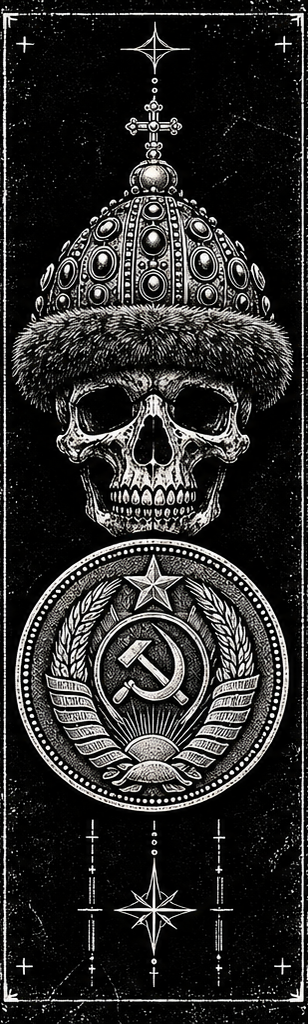
Left, original XLVII plate

Left

In 1957 the Soviet Union put Sputnik into orbit. Its engineers had published instructions inviting radio amateurs to receive the signal; a receiver, location, and clock made observations possible from the ground.

Sergey Brin, born in Moscow, received the National Medal of Science for work in information retrieval. Brin and Page’s 1998 search-engine paper describes indexing and link structure, while a provenance record identifies how a retrieved document derives from earlier material. Result order and source history can therefore be examined as separate properties.

Historical record

  1. A signal makes an orbiting object observable from the ground.

    Sputnik launches on 4 October. NASA’s historical archive preserves the event and its radio context, allowing a listener to encounter a surviving signal while distinguishing that recording from a complete reconstruction of the satellite’s orbit.

  2. A search engine explains how links affect what a reader finds.

    Brin and Page publish their description of a large-scale web search engine. The paper makes retrieval an engineering problem involving indexes and link structure; the route to a document becomes part of how that document enters public attention.

  3. A data model gives derivation a durable description.

    The W3C PROV recommendation provides a way to relate records, the activities that produced them and the agents involved. It supplies an explicit structure for preserving a document’s transformation history alongside its searchable content.

A search result can preserve a source while changing its visibility.

Take a constructed archive containing ten reports about one measurement. One report is the original observation; several later summaries link to it, while a popular commentary links only to another commentary. A link-based ranking may make a secondary account easier to find than the original. The useful comparison is between the citation path, the archive’s holdings and the result order. None alone establishes that the most visible account is the most accurate.

  • Draw a directed graph in which an arrow means a documented citation. Keep the original observation, later quotation and independent replication as separate relationships.
  • Open the highest-ranked account and trace one numerical claim back to its earliest accessible record. Mark a missing link rather than silently filling it.
  • Review items whose title or summary has changed without a preserved version. Searchability should help a reader reach the evidence and understand its date.

Recordings and archives

NASA · archive

NASA Historical Sounds

The official audio collection includes Sputnik’s signal among other mission sounds. The recording is an artifact to examine with its date and provenance, not a substitute for an orbital data set.

Research sources

  1. Sputnik

    NASA History · Launch on 4 October 1957 and historical tracking context.

  2. NASA Historical Sounds

    NASA · Official archive containing historical spacecraft and mission audio, including Sputnik.

  3. The Anatomy of a Large-Scale Hypertextual Web Search Engine

    Sergey Brin and Lawrence Page / author research archive · Original 1998 search-engine paper; ranking and hyperlink methods.

  4. PROV-DM: The PROV Data Model

    W3C · 30 April 2013 Recommendation: entities, activities, agents and derivation.